Constituency MP Bothering

Further to my declaration on March 19th that I would be writing to my MP regarding the bullying of members of the public by state officials, here is a copy of the letter I sent to him this morning:

Dear <My MP/>,

I would like, if I may, to draw your attention to the Westminster Hall debate of March 17th 2011 on the Bill of Rights and especially to some of the disturbing cases mentioned therein by John Hemming (Birmingham, Yardley) and Richard Bacon (South Norfolk) of constituents being warned against raising matters of concern with their MP.

You may also be concerned to learn that the Official Solictor takes the view that he is not accountable to MPs for the way that he acts in individual cases.

For your convenience, the transcript of the debate (which I very much encourage you to read) can be found here:- http://www.publications.parliament.uk/pa/cm201011/cmhansrd/cm110317/halltext/110317h0001.htm

I sincerely hope that none of my fellow electors in <My Constituency/> have been treated by officers of the State in a fashion similar to those unfortunate souls mentioned during the debate and I trust that you will be asking questions of the Lord Chancellor as to the operation of the Family Courts as well as the Court of Protection and the viel of secrecy that both divisions work under.

Yours sincerely,
MG (Miss)

I shall, of course, post any reply that I get.

Politicking whilst Libya burns

Less than a day into enforcement of the no-fly zone over Libya and cracks are apparently appearing in the 2011 edition of the coalition of the willing with the Secretary-General of the Arab League, Amr Moussa, reported to have said the following:

“What has happened in Libya differs from the goal of imposing a no-fly zone and what we want is the protection of civilians and not bombing other civilians.”

Western governments have been quick to respond, knowing that without Arab backing they could find themselves in yet another quagmire. A spokesman for Barack Obama told Reuters:

“The resolution endorsed by Arabs and the UNSC (United Nations Security Council) included ‘all necessary measures’ to protect civilians, which we made very clear includes, but goes beyond, a no-fly zone.”

The difficulty of course stems from the fact that for the coalition to be able to operate a no-fly zone safely, air defences have to be destroyed. Easy enough to do without collatoral damage if they are sitting in the middle of nowhere but as Gaddafi has been taking a leaf from the book written by the Palestinians and embedding them into civilian areas, the chances of non-combatants being killed in suppression raids become almost a near certainty.

Precision guided weapons are designed to be accurate but they are also full of explosive. The warhead on a Tomahawk missile contains 1,000lb of muntions whilst each bomb dropped from aircraft can be double this. All of which adds up to a very large explosion come detonation time. Why make bombs that large? Because when accuracy is measured in meters rather than millimeters, a large explosion makes up for not quite pin-point perfect accuracy.

However I am getting off topic. Back, therefore, to Amr Moussa.

Moussa is an Egyptian and before he became SG of the Arab League he was, from 1991 to 2002, Minister of Foreign Affairs in the Mubarak government. He is also, if opinion polls are to be believed, the current front runner to become the next President of Egypt and, although reports of his candidacy are not confirmed at this time, he has not ruled out standing.

Given that Qatar and the UAE have sent aircraft to support the no-fly zone it would seem at this time that Amr Moussa is guilty of gross politicking. But if so, he isn’t the only one. I’m looking at you, David Cameron, and you, Nicolas Sarkozy.

To fly or not to fly

Under the auspicies of the United Nations (UN), an unelected body whose only legitamacy is derivied from the member states that atually pay attention to it, we find ourselves with an ‘offically’ sanctioned no-fly zone over Libya, the theoretical goal of which is to stop those last remaining opposition strongholds falling to the country’s undemocratic leadership.

Such zones are usually the preserve of national governments and exist in a number of countries for the purposes of keeping unauthorized aircraft away from facilities that are deemed to be sensitive. They are not always however and previous to the the decision of March 17th 2011 there had been two no-fly imposed upon countries (Iraq and Bosnia) following activity at the UN.

The legality and morality of such decisions aside (I’ll leave you to the read the opposing views of Mark Wallace and Anna Raccoon amongst others on this), it is the practicality of enforcing the gradiose ideas of our politicans which is worrying. Just keeping a plane in the air takes a staggering number of people in all fields from maintenance to kitchen all of whom will be replaced over time as tours of duty end.

The 12 years of the two Iraqi no-fly zones collectively saw over 231,000 sorties flown in total for both the northern and southern zones and involved something like 50,000 personnel over the period between the two Gulf Wars.

The 32 month no-fly zone over Bosnia in the mid-90s resulted in 100,420 sorties flown by 239 aircraft and required all told 4,500 personnel from 12 countries and they operated out of five bases plus carriers. The result? Reasonably successful in preventing flights by fixed wing aircraft but not so much by helicopters – partly due to Serbs and Croats disguising them in order to sow doubt in the minds of the pilots enforcing the zone.

Logisitically a no-fly zone is, like all military operations, a resource sink and some of the considerations that the planners would have taken into account for this operation include:

1. How much of Libya is this no-fly zone going to cover? Libya is the 17th largest country in the world by area and four times the size of Iraq, although a lot of it is desert and most of the populations centres are on the North African coast.

2. If bombers are to be used, Libya’s air defences will need to be suppressed – either by the bombers or by cruise missiles. Use of the latter however will require good intelligence and a lack of ground movement unless real time data from Predator drones can be fed to the Tomahawks post launch. The good(-ish) news however is that the deal to upgrade to current Russian tech was squashed by the Russians themselves.

3. Whilst it was once said that an army marches on its stomach, the currency of this operation will, after personnel, be fuel. The closer the staging area, the longer planes can remain in the air, which cuts down on the number of aircraft needed. Libya might not be far away but when dealing with aircraft with ranges of less than 2,000 miles (and much less if involved in prolonged combat or flying at low level) then every mile is precious.

4. The end goal. So far as I can see from reading the text of the UN resolution there isn’t one which means that if the situation in Libya isn’t resolved quickly, all of the nations involved are going to be looking at rotating new forces in to replace those already there. In some cases, such as with the French carrier Charles de Gaulle, no like for like replacement exists so there exists the potential for a reduction in the number of assets available to be used as time goes by.

As always when it comes to military interventions, the easy bit is the talking. The difficulty starts with turning the flowery language so beloved of politicians and diplomats into action and once the bodies start mounting up things will only get harder.

Something *Definitely* Worth Reading

Is Anna’s reporting of a parliamentary debate on how members of the public who, whilst engaged with officials of the state, have been threatened and in cases have had restrictions imposed upon them to prevent them from even raising the matter with their MP.

Also congratulations to John Hemming MP for mentioning the matter and allowing the public to get a glimpse of the abuses perpetrated by the state.

FWIW I shall be following the matter up with my MP.

No sex please, we’re British

Political lobbying group and some time parenting site Mumsnet has been forced by its members to back track on its support for censoring pornography on the web. Needless to say this hasn’t pleased the new Conservative MP Claire Perry the “won’t someone think of the children” authoritarian nut job who is apparently the current cheerleader in parliament for such a scheme.

Why the change of heart?

It seems that pressure came from two directions. Firstly, the more technically savvy members threw their children’s toys out of the pram over the site’s bandwagon jumping, pointed out that as a result of the law of unintended consequences the site itself could well be filtered and downed tools – an action that resulted in no technical support for those in need. Secondly, a few members mentioned the obvious issue: that it is not the job of the state to raise children.

Strangely the second one didn’t appear to fly with one of the site’s founders:

“I think there have been some really valid points about workability raised here but the “this is the thin end of the wedge on censorship” one doesn’t make sense to me. We already censor loads of things in the name of child protection on the internet and elsewhere. Of course there are valid concerns about where you draw the line but you can’t deny that we do draw the line already all over the place – we censor illegal images, we rate dvds, we have a tv watershed.”

Who, unsurprisingly, completely misses the point. Don’t want young children to see pornography on the internet? Then don’t let them have a computer, x-box etc in their bedroom. Set up an account for them on the computer in the communal area that has proper filters in place to stop them seeing it. Don’t know how to do that? Then ask a friend, neighbour etc. Use some bloody initiative rather than expecting the state to act as backstop for your stupidity!

/takes blood pressure tablets and calms down.

Ahem.

Eventually however Mumsnet did decide that perhaps it had acted too hastily and the same person who posted the previously stupidity said:

“We are not going to back any solution… what we are interested in is protecting children online. However, everything we do on Mumsnet is a conversation and our opinions evolve with our users.”

Translation: We got our fingers burnt and next time we will talk to the membership before leaping on any passing bandwagons.

We aren’t of course out of the woods as yet. The government, in the shape of Culture Minister Ed Vaizey as well as the aforementioned Clarie Perry, is already talking to ISPs about getting them to filter the web. Perry, writing in the Telegraph, explains that she would like to see “a home network level ‘opt-in’ filter for internet porn”. Additionally the head of Ofcom (that government quango) said that, “given the technological convergence, if the ISP industry does not come up with a workable opt-in solution, regulation may be the only answer”.

Safermedia – a Christian charity (fake charity status unknown) also campaigning for internet filtering – said about the proposals:

I am surprised that parents would be critical of the campaign because the idea is to help parents. If internet users have to opt in to view pornography parents don’t have to worry about protecting their children from it… I think there has to be censorship to protect children. If you’re over 18 you won’t be censored [under the proposals]”

For crying out loud, when will you fools get it? You’ve recently been berating various countries like Egypt, Algeria and Tunisia for closing down the internet in order to try and stop anti-government protesters. You frequently complain about China locking down the internet and employing an army of thousands to police content as well as companies such as Google who have bowed to the regime there and acted as censors.

Even after all of that you want to employ similar tactics in this country? And all because of the emotive rallying cry of “Won’t someone think of the children”. In the name of the children we have the Criminal Records Bureau, the Independent Safeguarding Authority and others. Have they made children any safer from the paedophile that would otherwise be living under every bed and stalking the corridors of our schools, youth centres and any other place where children might go? No, of course they haven’t. All those bits of paper have done is ensure that innocent people are dismissed from their jobs and that children are being taught to fear all adults.

Can such a scheme even work? Well the Australian government under Prime Ministers Kevin Rudd and Julia Gillard have been trying to do the same for some years now without success (as yet). It has been dogged by controversy with banned sites so far including such horrors as a dental practice and various education sites – quite amusing given that Stephen Conroy, the idiot charged with trying to implement the scheme, has said that it would be “100% accurate”. An opinion poll has suggested that over 90% of the Australian public don’t want the scheme and even children’s charities out there have dismissed it as a waste of money that could be better spent elsewhere.

In the end though it is not about the children – that is just a convenient hook to use and one that can be hard to argue against without being smeared as someone who supports child pornography and other such nonsense – but about control. The internet, allowing the rapid dissemination of information, is a threat to governments around the world regardless of how democratic they appear to be and for that reason they want to place limits on it.

Such behaviour must be resisted at all costs.
Who Rules?

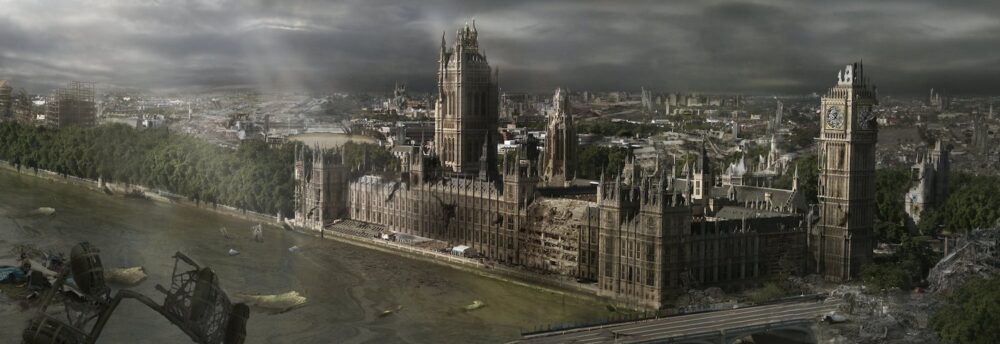
On Thursday the House of Commons partook of a discussion and division on the issue of voting by convicted prisoners. The result of this vote is not binding on the government being as it was simply a backbench motion allowing members to express an opinion on a matter that has yet to be formally presented to the house by the government. In the free vote that followed the debate the motion was passed by 234 to 22. A roll of honour/list of shame* is available. Those on the government payroll and the Labour front bench abstained.

That the matter was under discussion is the ‘work’ of John Hirst, a thug convicted of the manslaughter** of his landlady with an axe, who sued the UK under the Human Rights Act because he was not allowed to vote whilst he was detained at Her Majesty’s (dis-)pleasure. The European Court of Human Rights (ECHR) ruled in his favour and asked the UK government to look again at the issue.

Predictably there has been a lot of outrage at the thought of the likes of Hirst being allowed to play a part in democratic elections whilst in gaol with one opinion poll putting support for the idea at only 9%. David Cameron has been widely quoted as saying that the idea makes him ‘physically sick’.

The whole issue however is somewhat of a red herring, a trifling concern. According to the most recent breakdown of figures that I could find (2010-08) there are 31,630 convicted people in prison serving 4 years or less (excluding under 18’s and fine defaulters but including the unsentenced). By the same criteria there are only 11,433 serving less than 12 months. Those numbers aren’t enough to form a constituency of their own. Split evenly across the 600 constituencies (come the 2015 election) that equates to 53 or 19 each (assuming an even split). Those sort of numbers aren’t going to affect the outcome of a general election.

Rather the issue here is one of sovereignty: is Parliament – elected by the population of the UK – supreme or does an external institution take precedence? MPs like to maintain that they are still in charge – and today’s vote has no doubt resulted in lots of back slapping amongst the Eurosceptic wings of the big parties – but they aren’t and haven’t been so for some time.

Unless Cast Iron Dave uses the result to find himself a spine and finally gives the public the in or out referendum*** that all of the big three political parties have offered at one time or another then it is meaningless. Justice Secretary Ken Clarke has already said that the UK would ‘do the minimum necessary in order to comply’ with the ruling and something tells me that said stance will not have been altered by what went on today.

It would be nice to hope that this is the straw that finally broke the back of the proverbial camel but I doubt it. Our elected representatives are, generally, too wedded to the idea of further political and economic integration no matter what the cost. Indeed I doubt that many of them realise that the PR exercise which is the Referendum Lock promised by the collation government will have no affect on the ongoing transfer of sovereignty to European bodies.

* Delete according to your belief.

** During the debate various MPs referred to him in other terms but unlike them this blog is not protected by parliamentary privilege and therefore cannot be so blunt.

*** Yes, I am well aware that the ECHR is a Council of Europe body, not a European Union one but given the amount of overlap that exists between the two and being aware that provisions exist on both sides for integration, withdrawal from the European Convention on Human Rights would (hopefully) mean expulsion from both entities as membership of each requires the the Convention to be ratified.

Vampires seek more blood…

Camden residents of properties in the higher council tax bands are probably well used to receiving begging letters from organisations asking for money. They may however be about to get a new one – from the council.

In addition to the £2,662.70 (£2,043.06 to Camden, £619.64 to the Greater London Authority) that they paid in council tax in 2010/11, the council is considering asking richer residents to donate up to 5% of their annual bonuses to help the council bridge the estimated £100 million gap between their income and their expenditure over the next three years.

And what might this scheme raise?

The paltry (in terms of their overspend) sum of £0.5 million – or 0.5% of the shortfall.

Really worth the effort, not.

So, how much does Camden Council spend?

In the accounts for 2009/10 (the last year available on their website) they spent £1,130.66 million.

If one is to make the (very unlikely assumption) that over the next three years they spend the same amount of money each year then we are talking a sum of £3,3391.88 million. A £100 million shortfall over the same time therefore works out as only 0.3% of that. Even if we are to say that it is the shortfall each year we can still only up to 0.9%..

Are Camden council therefore really saying that they can’t save less than 1% of their budget?

On a final note, would these begging letters be sent to their CEO (salary £199,961 plus £11,481 bonus in 2009/10) or the ‘Director of Culture and Environment’ (salary £151,734 plus £8,712 bonus in 2009/10) or any other the other 15 officials whose total remuneration (excluding pension contributions) topped out at over £100,000? Assuming of course that these individuals actually live within the borough…

1,000,000,000,000

Shortly after 1700 this afternoon the TPA’s debt counter rolled past the One Trillion mark. That’s one thousand billion pounds, ladies and gentleman, a one followed by a dozen zero’s or, for those who remember such things from school day maths, 1 x 10 to the 12th.

1,000,000,000,000.

That is how much UK Plc officially owes. Unofficial estimates – which include PFI costs and pension liabilities – put it at over 4 TIMES this. It is, by any count, a heady sum and one so vast that it becomes meaningless as we simply do not think in such numbers on a daily basis. Indeed, I am reminded of my dad talking about his work as an insurance underwriter in the oil and gas industry:

“We had to knock three zero’s off just to make the figures sound realistic.”

Let me then try to put the colossal figure into perspective.

  • It is over 81,074,069 times the wages of someone doing a 40 hour week at the minimum wage of £5.93/hour
  • It is over 38,610,038 times the average salary for a full time employee of £25,900
  • It is over 740,740 times the £1.35 million salary that Bob Diamond will earn as the CEO of Barclays once he takes over the job in March
  • It is over 833 times the £1.2 billion that Philip Green paid his family in 2005
  • It is over 166 times the £6 billion tax bill that certain individuals would have us believe Vodafone avoided
  • It is over 142 times the collective bonus pool of £7 billion expected to be paid to bank staff in 2011
  • It is over 7 times the approx £130 billion paid to RBS and HBOS in order to bail them out
  • It is 5 times the amount of money that we have created out of thin air in the last two years
  • It is almost 1.5 times what the government plans to spend in the year 2010/11

But, for those looking for some crumbs of comfort, it is only about 70% of our current GDP. On second thoughts it is not that comforting, is it?

A rose by any other name…

Amongst the many reasons to detest our former governing party was their propensity to tell people what they should be eating, drinking, thinking and doing. Their exit was greeted with a sigh of relief and the thought that such Nannying tendencies would be a thing of the past. Those of us who thought that (and I have to include myself in this) were wrong. Nanny is still there but has been renamed. Rather than hectoring us, our new government wishes to ‘nudge’ us.

Meet Richard Thaler from the University of Chicago, co-author of Nudge: Improving Decisions About Health, Wealth, and Happiness and an economist who, as a leading exponent of ‘nudge theory’ has been advising David Cameron and his Orwellian sounding ‘Behavioural Insight Team’.

Nudge theory is described as being ‘libertarian paternalism’ and is, according to Wikipedia, about

help[ing] you make the choices you would make for yourself — if only you had the strength of will as well as the sharpness of mind. But unlike ‘hard’ paternalists, who ban some things and mandate others, the softer kind aims only to skew your decisions, without infringing greatly on your freedom of choice.

Well, they have the paternalism bit right, that’s for sure. All they have described is the process by which parents (should) raise their children without mentioning the inevitable discipline that is required when the boundaries are pushed too far.

One problem though – people who we legally consider to be adults are not children and thus should not be treated as such. Any attempt to skew my decisions towards something I don’t want to do is infringing on my freedom of choice. If I want to buy a round, eat food that isn’t health, donate my organs, give to charity or smoke I’ll bloody well do so because I want to – not because a politician such as Oliver Letwin has decreed that he would like to see me doing so.

This is not Libertarianism and can’t be. Libertarianism allows people to make their own choices (so long as they do not mean violence to another) and accepts that this will result in some mistakes being made. This is normal behaviour and is part of the how humans have learnt over the last x million years. You can advise that something that it is not a good idea but you can’t in anyway force them not to do it by removing that option.

Paternalism is control by another name. It is about reducing the level of choice available to someone simply because a busy body who thinks they know best has decided that some choices are ‘bad choices’ and that they should therefore be taken away.

The new government may have whitewashed Nanny and given her a new name but do not be fooled. She is still there, in the background, determined to interfere with and control the population and she must be resisted at all cost.

Charity begins at…? Part 2

As I mentioned yesterday, the Government’s spirit of giving seems to be in full swing this festive season. Not content with our money, it is after our bodies as well.

Yes, all right, before the howls of anguish start, I am being slightly dramatic.

Anyone who has had to fill in a D1 form to obtain a new or alter details on their existing driving licence will be aware that for quite some time now there has been a section to allow you to indicate that you would like to join the organ donor register. Completion of this section has been entirely voluntary.

But not any longer – or not after July 1st anyway. The Public Health minister, Anne Milton, has announced (news report only I’m afraid, I haven’t been able to find her actual statement) that from then on anyone filling out the form will have to indicate one of the following responses:

  • Yes I would like register on the NHS Organ Donor Register;
  • I do not want to answer this question now;
  • or I am already registered on the NHS Organ Donor Register.

It might not seem like much of a change, indeed the second answer is perhaps much the same as skipping over the section completely. The problem is that this change is forcing people to give a government mandated answer – and there isn’t a ‘No’ option. My organs are my property and it is up to me what I do with them, not for the state to reduce my say in the matter to a choice of “yes; already have done; ask me again later”.

It isn’t even a one time answer. Legally one has to notify the DVLA of every change of address as well as renewing the photo card portion of the licence every 10 years and then there is every extension when you get past 70. Each time the state gets to nag you again. Each time the question and the possible answers may change. How long before mission creep means that every person who wants a driving licence is automatically enrolled on the organ donor register?

Over the top? Not really. The likes of the BHF would like to see organ donation become an opt-out thing where everyone is included unless they say otherwise. That to me is tantamount to an organisation declaring that it owns your body unless you choose to take that ownership back and is completely unacceptable. The choice should always be mine to make. Anything else is unacceptable force by an outside agency and should be opposed.

And before anyone complains, I am not against organ donation. I am simply against the idea of someone else making the decision for me.